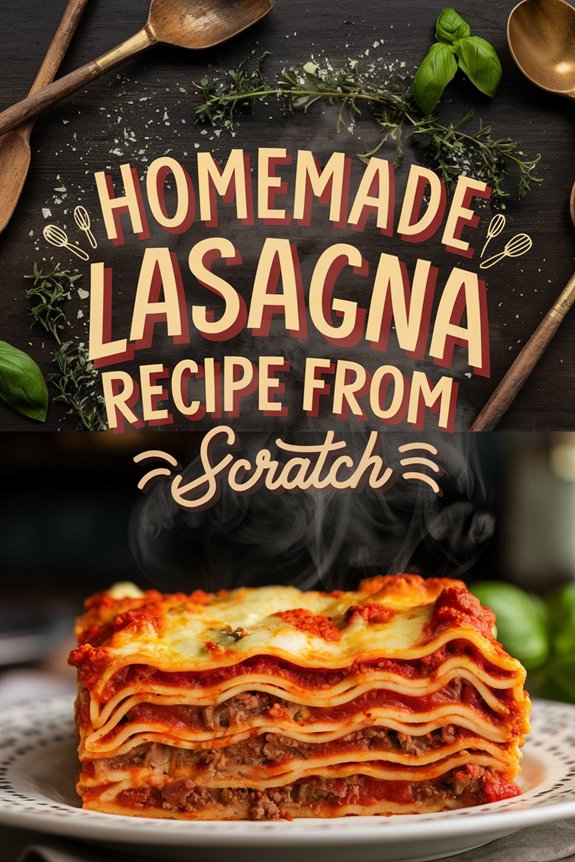
Why You’ll Love this Homemade Lasagna
Comfort food at its finest, this homemade lasagna recipe will transform your dinner table into an Italian restaurant experience. The rich layers of pasta, beef, homemade sauce, and three different cheeses create a mouthwatering masterpiece that’s worth every minute of preparation.
I’m convinced you’ll appreciate how the ricotta mixture, enhanced with eggs, creates that creamy middle layer that melts in your mouth.
And can you imagine the aroma of sautéed garlic, onions, and herbs filling your kitchen? There’s something magical about pulling a bubbling lasagna from the oven, with its perfectly golden, cheesy top waiting to be served.
What Ingredients are in Homemade Lasagna?
Creating authentic homemade lasagna requires gathering quite a collection of ingredients, but trust me, each component plays a vital role in building those magnificent layers of flavor. The combination of rich meaty sauce, creamy cheese filling, and tender pasta creates that classic comfort food experience we all crave.
Let’s break down everything you’ll need to make this incredible Italian dish from scratch.
- 15 dry lasagna noodles
- 1 pound ground beef
- 3 cups mozzarella cheese, shredded
- 1½ pounds part-skim ricotta cheese
- ¼ cup parmesan cheese, grated
- 3 large eggs
- 20 ounces spinach
- 40 ounces crushed tomatoes
- 1¼ small onions, finely chopped
- 1¼ garlic cloves, minced
- 1¼ celery ribs, finely diced
- 1¼ carrots, finely diced
- 2 tablespoons vegetable oil
- 3 tablespoons extra virgin olive oil
- ⅓ cup olive oil
- 3⅛ tablespoons butter (plus 2 more tablespoons)
- ⅓ cup flour
- 2½ cups whole milk
- 1 teaspoon black pepper
When shopping for these ingredients, quality really does matter for the best results. Opt for whole milk and part-skim ricotta (rather than fat-free) to achieve that perfect creamy texture.
Fresh vegetables will give your sauce more vibrant flavor than pre-packaged options. And while pre-shredded cheese is convenient, freshly grated mozzarella and parmesan melt more smoothly and provide better flavor.
Can you already smell the amazing aromas that will fill your kitchen?
How to Make this Homemade Lasagna
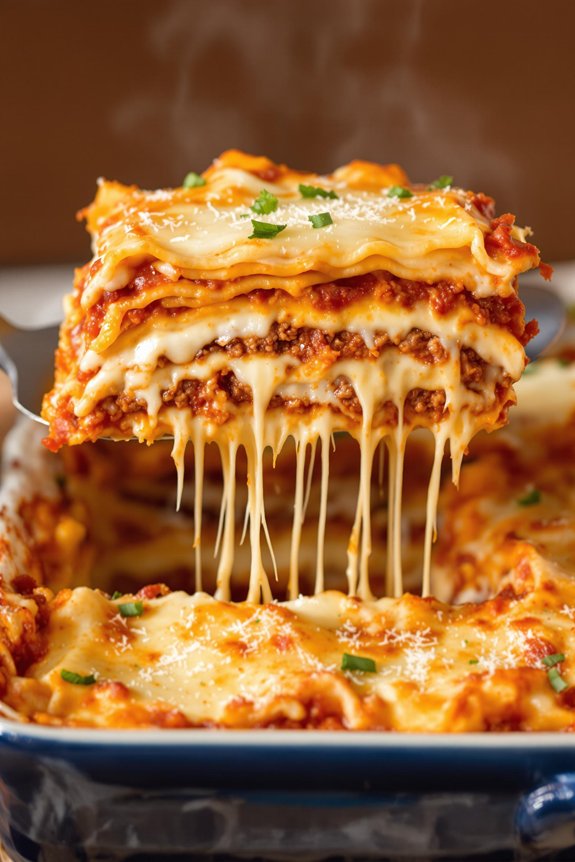
Let’s transform these ingredients into a mouthwatering masterpiece! Start by cooking 15 dry lasagna noodles according to package directions, but keep them slightly firmer than al dente since they’ll continue cooking in the oven.
While those are boiling, heat 2 tablespoons of vegetable oil in a large skillet and brown 1 pound of ground beef until no pink remains. Season with 1 teaspoon of black pepper and set aside.
Now for the creamy béchamel sauce, which adds incredible richness. In a medium saucepan, melt 3⅛ tablespoons of butter over medium heat, then whisk in ⅓ cup of flour until it forms a smooth paste. Gradually pour in 2½ cups of whole milk, whisking constantly to prevent lumps (nobody wants a lumpy lasagna, right?).
For the tomato sauce component, heat ⅓ cup olive oil in another pot and sauté 1¼ small onions, 1¼ garlic cloves, 1¼ celery ribs, and 1¼ carrots until softened and fragrant. Add 40 ounces of crushed tomatoes and simmer for about 20 minutes until slightly thickened.
The cheese filling is where the magic happens. In a large bowl, combine 1½ pounds of part-skim ricotta cheese with 3 large eggs, mixing until smooth. In a separate pan, melt 2 tablespoons of butter and wilt 20 ounces of spinach, then drain well and mix into the ricotta.
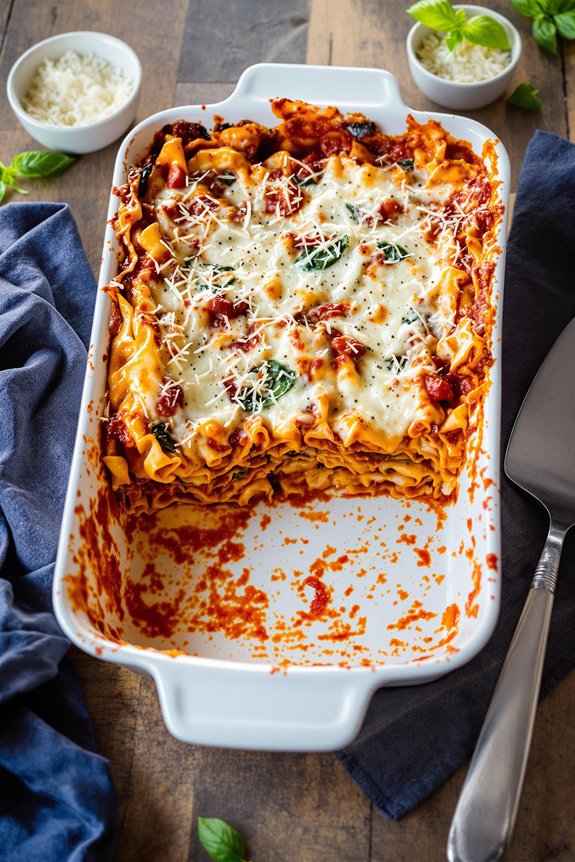
Now comes the assembly—layer sauce, noodles, ricotta mixture, and sprinkle with portions of the 3 cups of mozzarella cheese. For the best results, consider investing in a quality stainless steel cookware that distributes heat evenly and makes cleanup easier after baking. Repeat these layers, finishing with sauce and a final generous sprinkle of ¼ cup parmesan cheese on top.
Bake at 375°F for about 45 minutes until bubbling and golden. Allow it to rest for at least 15 minutes before slicing, giving all those magnificent layers time to settle. The hardest part? Waiting to dig in while that tantalizing aroma fills your kitchen.
Homemade Lasagna Substitutions and Variations
While this classic recipe creates the perfect traditional lasagna, you might find yourself needing to adapt based on dietary restrictions, pantry availability, or simply your taste preferences.
I’m a firm believer that recipes are just guidelines, not rigid rules.
Need a gluten-free version? Swap traditional noodles for gluten-free ones or thinly sliced zucchini ribbons.
Dairy-free? Try cashew ricotta and plant-based mozzarella.
Ground turkey or chicken can replace beef for a lighter option, while vegetarians might prefer lentils or mushrooms for that meaty texture.
Don’t have spinach? Kale or Swiss chard work wonderfully.
What to Serve with Homemade Lasagna
So you’ve mastered this incredible homemade lasagna—now what goes alongside it?
I always recommend a crisp green salad with a tangy vinaigrette to cut through the richness. Think arugula with lemon dressing or a classic Caesar.
Garlic bread is non-negotiable in my book. That buttery, herby crunch complements the tender pasta layers perfectly.
For vegetables, roasted asparagus or sautéed broccolini add color and nutrition. A simple side of marinated cherry tomatoes with fresh basil works beautifully too.
Want something lighter? A small cup of Italian wedding soup makes a lovely starter.
Final Thoughts
Creating a homemade lasagna from scratch truly stands as one of cooking’s most rewarding achievements.
There’s something magical about layering those noodles with rich sauce, creamy cheeses, and savory fillings, watching it transform in the oven into a bubbling masterpiece.
I find the process almost meditative—the chopping, stirring, and assembling becomes a rhythm that connects me to generations of home cooks before me.
Don’t you love that first perfect slice, steam rising as the layers hold their shape?