
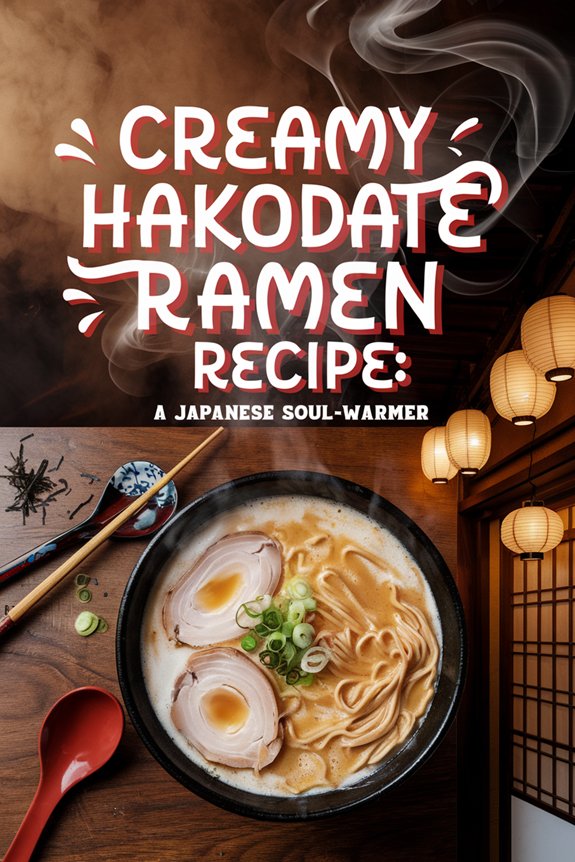
Why You’ll Love this Creamy Hakodate Ramen
Comfort in a bowl is what this Creamy Hakodate Ramen delivers with each steaming spoonful. I’m talking about that rich, milky broth that comes from hours of patient simmering—turning simple bones into liquid gold.
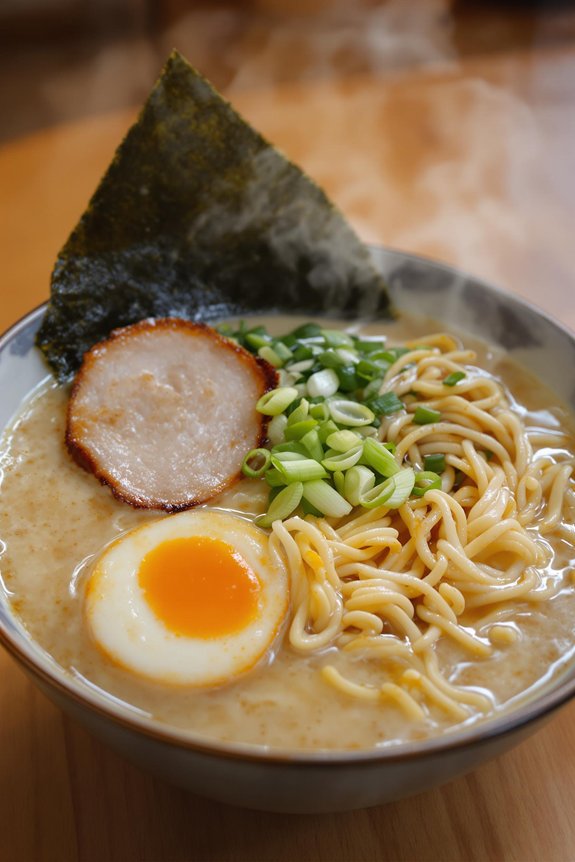
Can you imagine the depth of flavor when chicken wings, thighs, and pork bones meld together? That’s the magic happening here. The tender char siu, jammy eggs, and fresh ramen noodles create the perfect balance of textures.
What’s not to love about a recipe that transforms humble ingredients into something so soul-satisfying? Trust me, your kitchen will smell amazing.
What Ingredients are in Creamy Hakodate Ramen?
Creating authentic Hakodate ramen requires a thoughtful selection of ingredients that work together to build those deep, complex flavors we all crave. The magic of this creamy, milky broth comes from slowly simmering specific cuts of meat and bones, which release collagen and marrow into the liquid. This foundational element gets paired with fresh noodles and traditional Japanese toppings that balance texture and taste in each bowl.
- 1 pound chicken wings and thighs
- 4 pounds pork bones
- 1 tablespoon salt
- 1-2 pounds fresh ramen noodles (about ½-¾ pound per bowl)
- ½ pound Chinese barbecue pork (Char Siu) or Japanese braised pork (Buta No Kakuni)
- 4-6 eggs, hard-cooked and cut lengthwise
- 1 (6-ounce) package dried bamboo shoots, soaked and boiled to soften
- 2 scallions, chopped
- 1 sheet nori seaweed, cut julienne
When shopping for these ingredients, quality matters tremendously. Look for bones with joints and cartilage to maximize flavor development in your broth.
The fresh ramen noodles make a world of difference compared to instant varieties, giving that authentic chew that holds up beautifully in the rich soup. Can’t find fresh noodles? A good Asian market will likely carry them, but in a pinch, some specialty grocers offer refrigerated options that work nearly as well.
For vegetarians, this particular recipe isn’t easily adapted since the milky broth is the signature element of Hakodate-style ramen.
Recommended Products

THIS 20QT STOCKPOT IS A NECESSARY ADDITION TO YOUR KITCHEN - This large 20QT stockpot features the timeless French kitchen elegance design; cuts a fine figure both in the kitchen and at the dining table - Made of food grade NICKEL FREE stainless steel for better health and better nutrition - 4.2MM in base thickness and 7.8LBS in weight - Great for boiling lobster, crab, or simmering stocks, soups for large crowds - Discover the gourmet chef in you with this beautiful and efficient stockpot.

THIS 24QT STOCKPOT IS A NECESSARY ADDITION TO YOUR KITCHEN - This large 24QT stockpot features the timeless French kitchen elegance design; cuts a fine figure both in the kitchen and at the dining table - Made of food grade NICKEL FREE stainless steel for better health and better nutrition - 4.2MM in base thickness and 8LBS in weight - Great for boiling lobster, crab, or simmering stocks, soups for large crowds - Discover the gourmet chef in you with this beautiful and efficient stockpot.

Large capacity: holds up to 8 quarts--great for large batches of soups, stews, and more
How to Make this Creamy Hakodate Ramen
The foundation of any great Hakodate ramen is its luscious, milky broth, which requires time and patience to develop properly. Begin by bringing a large pot of water to a boil, then add 4 pounds of pork bones and boil vigorously for about 10 minutes. This initial boiling step might seem unnecessary, but trust me—it’s essential for removing blood and impurities that would otherwise cloud your broth.
After the first boil, drain everything in a colander and rinse the bones thoroughly under cold water. Think of this as giving your bones a proper bath before the main event.
With your pot cleaned and refilled with fresh water, bring it back to a boil and add the cleaned pork bones, 1 pound of chicken wings and thighs, and 1 tablespoon of salt. This is where the magic happens. Keep the pot simmering on medium-high heat for at least 3 hours—though honestly, doubling that time will yield even more spectacular results.
The goal here is extraction: you want that collagen and marrow to slowly release into the water, transforming it into the signature milky broth that Hakodate ramen is known for. You’ll know you’re on the right track when the liquid turns cloudy white.
When your patience has finally paid off, skim the fat from the surface, strain out the spent bones and meat (which have nobly sacrificed their flavor to your cause), and return the broth to just under a boil.
Assembly is where creativity meets tradition. For each serving, place a portion of your boiled and drained fresh ramen noodles (about ½-¾ pound per bowl) at the bottom of a wide, deep bowl.
Arrange slices of Chinese barbecue pork or Japanese braised pork alongside halved hard-cooked eggs that have been simmered in a char siu marinade-water mixture for extra flavor. Pour the piping hot broth over everything, then garnish with the rehydrated bamboo shoots, chopped scallions, and julienned nori seaweed.
For restaurant-quality preparation, a professional food processor can significantly reduce prep time for garnishes and toppings, allowing you to focus on perfecting your broth.
The steam rising from your bowl will carry aromas that transport you straight to the streets of Hakodate, where this particular style of ramen was perfected through generations of loving hands.
Creamy Hakodate Ramen Substitutions and Variations
While authentic Hakodate ramen relies on specific ingredients, you needn’t worry if you can’t source everything the traditional recipe calls for.
The broth, rich and milky, can be made with chicken bones alone if pork bones aren’t available. No char siu? Try using leftover roast pork or even bacon in a pinch.
For a lighter version, I’d suggest using chicken breast instead of thighs.
Vegetarians might swap in mushroom broth with a dash of miso for depth.
Can’t find fresh ramen? Those dried packets work surprisingly well—just discard the seasoning packet.
The soul of this dish lies in its adaptability, not rigid authenticity.
Recommended Products

GENEROUS COOKING SURFACE: 12 x 12 inch cooking area provides ample space for family meals

HASSLE-FREE COOKING – Cook your way from breakfast to dinner and everything in between. This electric skillet with lid is powered by 1400-watts and made of high-quality aluminum body that conducts heat well for efficient, faster and better cooking.

HASSLE-FREE COOKING – From breakfast to dinner, enjoy quick and easy meals with this 1400-watt electric skillet. Its durable aluminum body ensures fast, even heat distribution for efficient and consistent cooking—perfect for busy days and everyday use.
What to Serve with Creamy Hakodate Ramen
Now that we’ve explored ways to adapt this beloved recipe, let’s consider what might accompany your steaming bowl of ramen goodness.
I’m a firm believer that simple side dishes work best with ramen’s rich flavors. A crisp cucumber salad with rice vinegar dressing offers invigorating contrast to the creamy broth.
Lightly pickled vegetables—daikon, carrots, or cabbage—add tangy brightness. Perhaps some gyoza? These pan-fried dumplings are ideal for dipping into any leftover broth.
For beverages, nothing beats cold Japanese beer or hot green tea. They cleanse the palate between those slurpy noodle bites.
Really, who needs much else when you’ve got a bowl this satisfying?
Recommended Products

MAX CAPACITY: Dry ingredients: 11 LB. X 0.1 Oz and 5000 grams x 1 gram Liquid ingredients: 5000 milliliter x 1 milliliter and 176 FL Oz x 0.1 FL Oz

𝗘𝗳𝗳𝗼𝗿𝘁𝗹𝗲𝘀𝘀 𝗪𝗲𝗶𝗴𝗵𝗶𝗻𝗴: Supports 5 units (oz/lb:oz/fl'oz/g/mL), tare function, and includes 2 AAA batteries for hassle-free operation

Contemporary Slim Design: Made of Stainless Steel Material; It is easy to use and clean; Provides accurate weight data with a user-friendly control panel and system; With high precision sensors to ensure correct performance and readouts
Final Thoughts
After spending time with this remarkable Hakodate ramen recipe, I’ve come to appreciate how truly special Japanese comfort food can be.
The process might seem intimidating at first—all that simmering and prepping—but isn’t that part of what makes it so rewarding?
The rich, milky broth that develops from those bones and joints, paired with perfectly cooked noodles and those delightful toppings.
Magic in a bowl.
What I love most is how customizable it is.
Add more char siu if you’re a meat lover, or extra scallions for freshness.
Your bowl, your rules.